I studied Three Dimensional Design / Ceramics with photography as supporting study at West Surrey College of Art and Design, Farnham, during the 1970s but, like so many art school graduates, was faced with the difficult prospect of earning a living. I got a job in the print industry and, after eventually becoming self-employed as a designer and photographer, I have remained in the print world to this day.
But about twenty-odd years ago I began to feel that my creative juices weren't flowing freely, and were looking for an alternative escape route. I got hold of an old kiln and have been occasionally firing the odd batch of pots, but graphics work always got in the way so a ceramics career never happened. But barely a day passed since then that I didn't think about what I wanted to make next.
Then came covid and lockdown. I lost a few clients, and with my pension looming I could afford to be a bit picky, so here I am with some time on my hands at last. Better late than never.
I suppose I am in fact influenced by the landscape (an over-used phrase I’ve often cringed at in the past) but what my landscape photography has always strived to portray was the way human activity has left its mark on the landscape – sometimes mundane, profound, absurd, even offensive. I don’t necessarily condemn it – in fact I’m usually celebrating the way we have made ourselves at home on this planet.
Those marks age with the passing of time, and many are assimilated by nature to the point where they seem to become a part of it. I love the way nature just trundles on, taking over when mankind abandons its attempts at immortality.
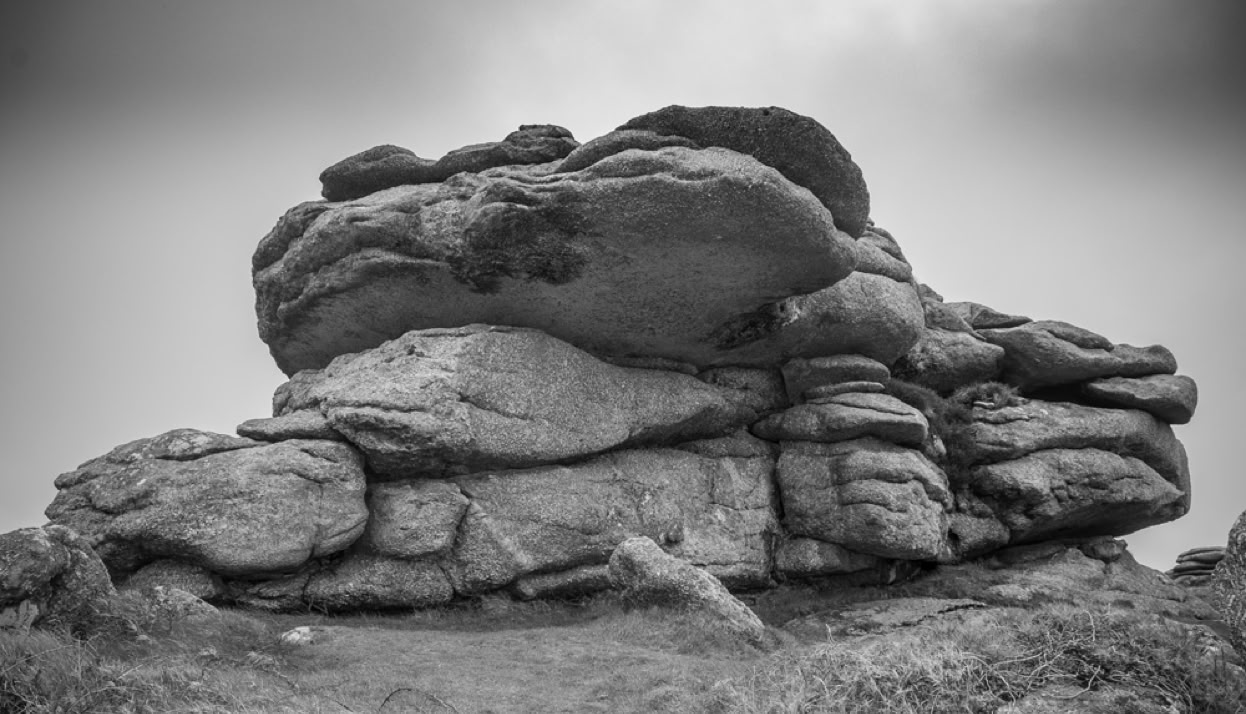
At the start of my journey into landscape photography I made a series of pictures of Avebury stone circle, the magnificent Silbury Hill, and more recently of the rocky beaches and hills of west Cornwall. These huge stones are remnants of an ancient world, and are even some of the ingredients in the clay we use. And occasionally on the beach I find huge rocks (they’re probably concrete) that have rusty iron pipes jutting out of them, defensive pillboxes left over from the war, witnesses to human intervention among these natural forms.
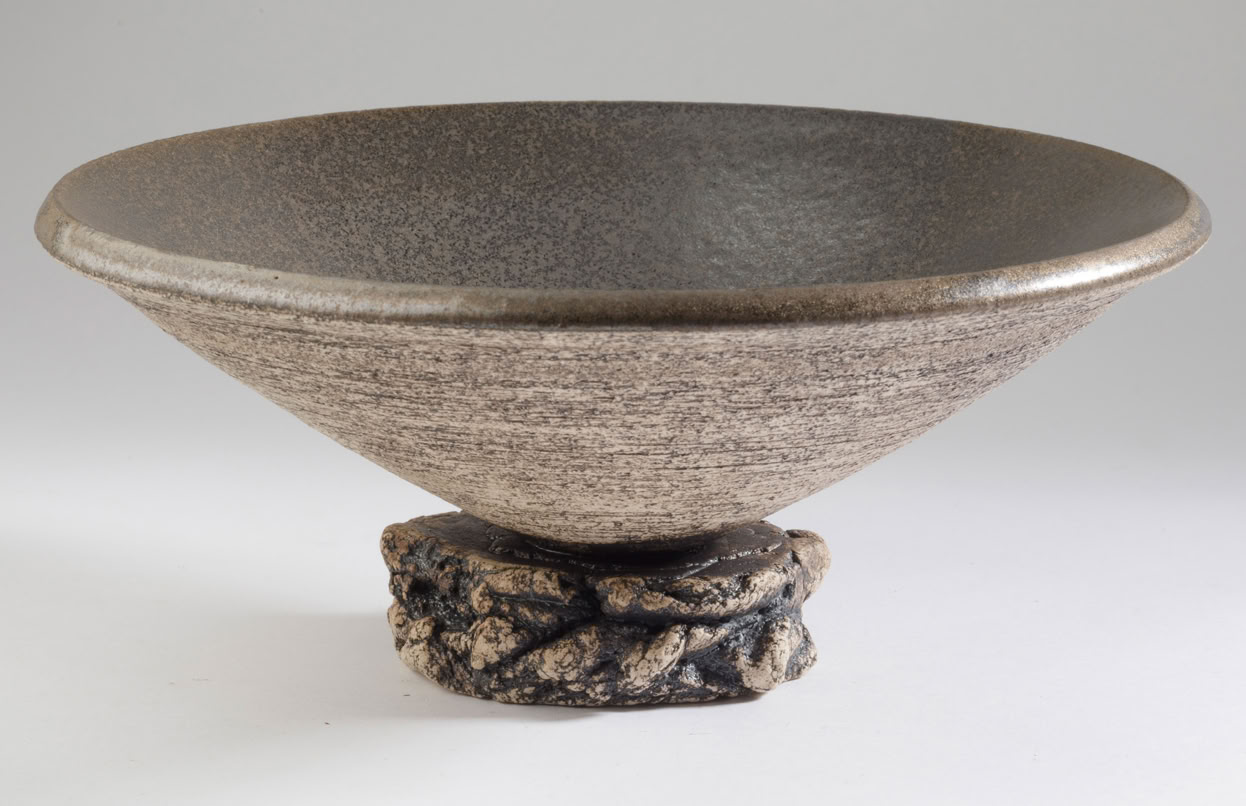
I work entirely in stoneware, mostly using slab techniques, also using a wheel where necessary. I’m not a production potter, and try not to ever make any two pieces alike.
My degree show was all slip-cast earthenware and when I restarted my practice several years ago I tried to start again from where I left off, making plaster casts etc. I found that the processes were taking up more of my energy than the pots themselves, and they lacked immediacy. I was designing and overthinking everything, so I decided to start from scratch, throw myself into clay, let it do its own thing, and see what it could do for me. I let one thing lead to another, observing and keeping an open mind about what I was making.
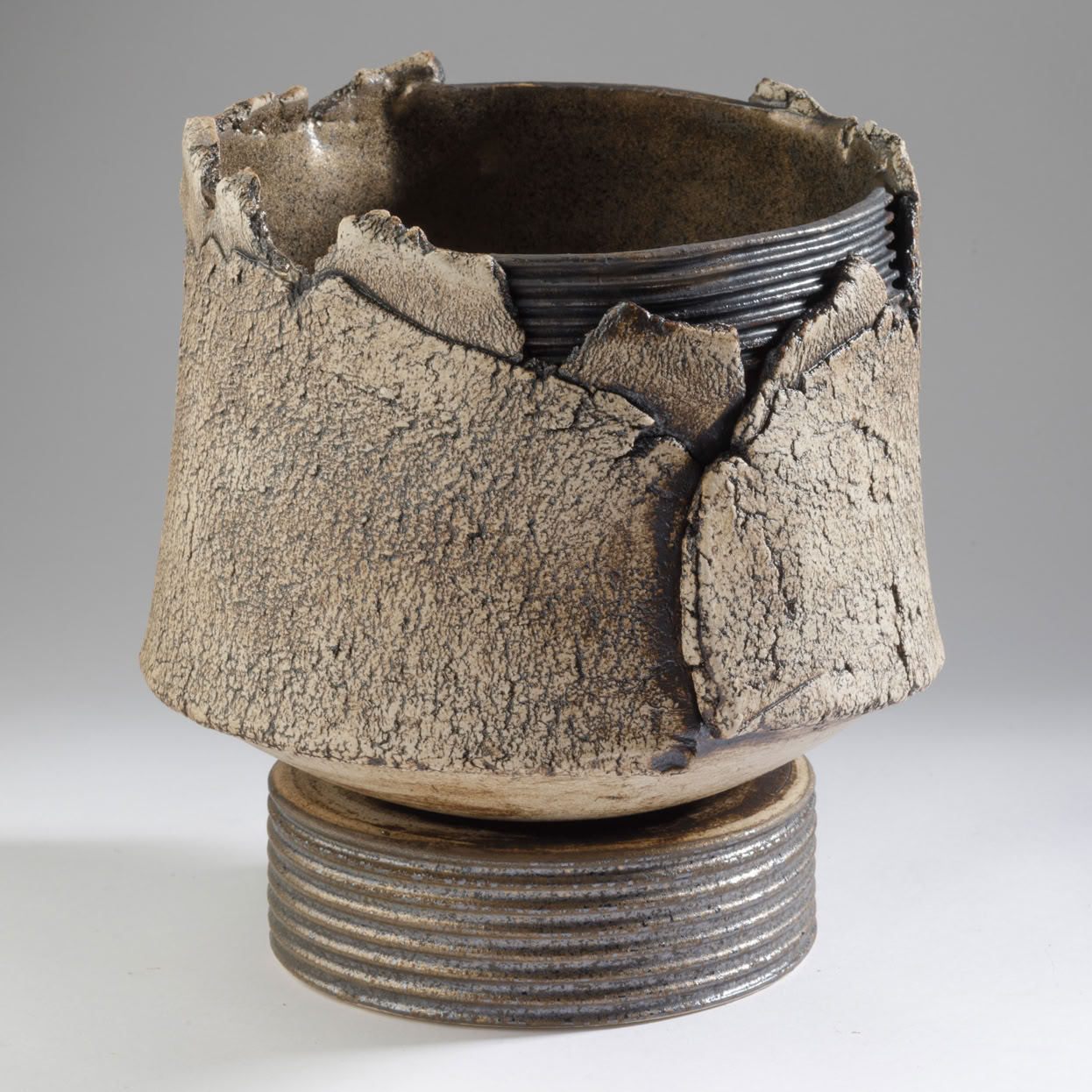
When I was in my teens I watched a documentary about Dan Arbeid, where he cut a pot into pieces and then stuck them back together. Fifty-plus years later I remembered that film, when slabs would sometimes tear as I lifted them from my bench. So I started joining them back together, making sure the join was obvious. This developed into an obsession, to make my slabs as imperfect as I could, with random flaws and textures that as a student I would have rejected.